


The "Ukuli Boko" is a sacred, hand-carved wooden stick traditionally presented by a father to his son, signaling that the young initiate is ready to undergo the Ukuli. This pivotal rite of passage requires the youth to successfully leap across a line of cattle, a triumph that marks his transition from boyhood into manhood and grants him the cultural rights to accumulate wealth and enter into marriage.
Preserving Heritage, Honoring Craftsmanship
At Indigenous Dream Walk, our mission is to act as a vital bridge between centuries-old indigenous artistry and the global community. We are dedicated to safeguarding the cultural expressions of the Omo Valley, ensuring that ancient traditions thrive in the modern world through sustainable and respectful commerce.
🌍 Our Mission & Purpose
Every piece in our catalog is more than a decorative item; it is a sacred archive of human history. By bringing traditional artifacts like the Hamar Borkoto stool, Hamar Ukuli Boko, Hamar Bunno Karamba and Hamar Shikini Ulaguyita into international spaces, we aim to:
Celebrate Cultural Diversity: Cultivate a global appreciation for the deep historical narratives and spiritual significance woven into tribal crafts.
Support Sovereign Economies: Provide direct, sustainable economic opportunities for indigenous artisans, ensuring fair compensation for their master craftsmanship.
Keep Traditions Alive: Foster an environment where ancient techniques are passed down to future generations, keeping indigenous heritage vibrant and self-sustaining.
🛡️ Ethical Sourcing & Cultural Integrity
We operate on a foundation of absolute transparency and mutual respect. We do not mass-produce; we curate.
Direct Artisan Partnerships: We work hand-in-hand with traditional creators to ensure that the commercialization of cultural goods is entirely self-determined and respectful of tribal customs.
Authenticity Guaranteed: Every artifact is vetted for its historical accuracy and material provenance, offering collectors true pieces of living history.
We believe that when a culture's art is preserved, its voice remains strong. Thank you for walking alongside us in our commitment to global cultural preservation.
About Us: Indigenous Dream Walk
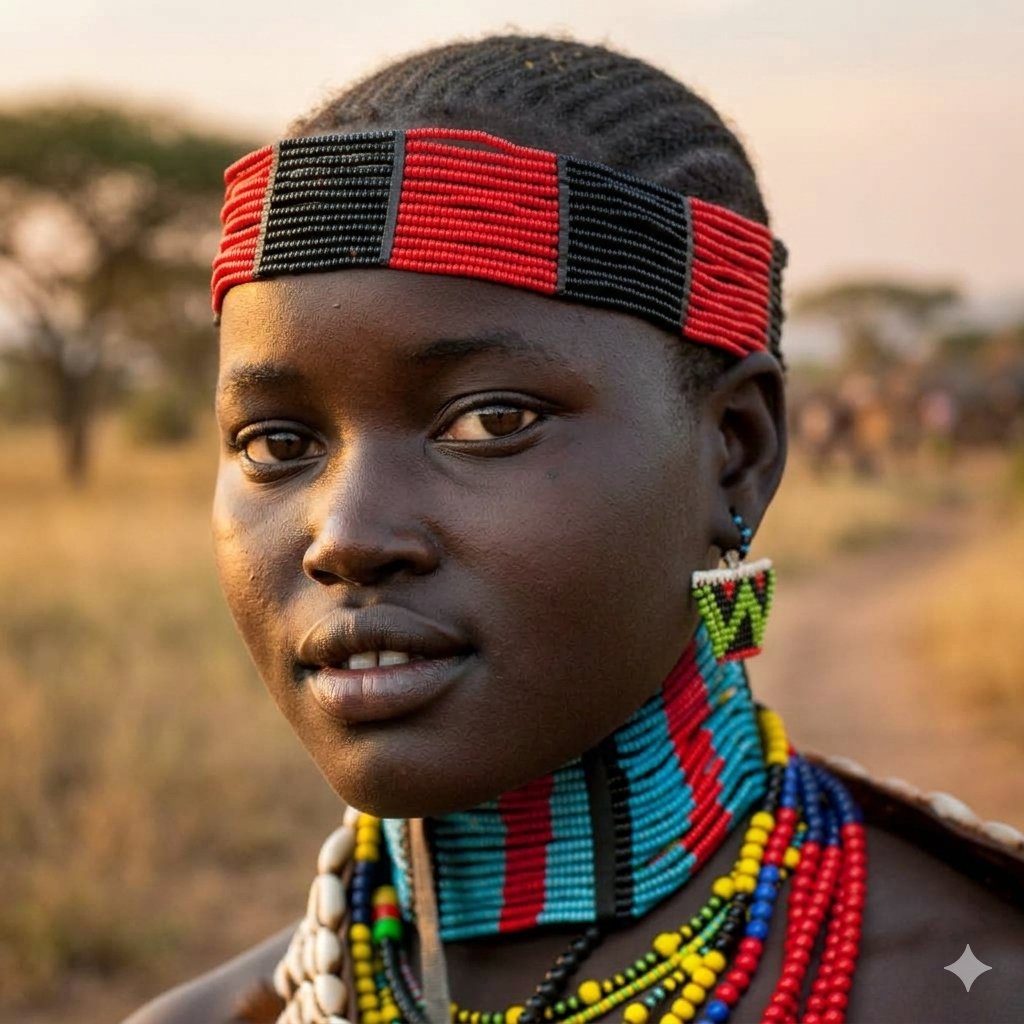
The Hamar: Living Heritage of the Omo Valley
The Hamar are a resilient Omotic, pastoralist community of approximately 68,500 people living east of the Omo River in the bush-covered hills of southwestern Ethiopia. Rooted in ancestral hubs like Buska Mountain, Turmi and Dimeka, they maintain a timeless and profound connection to their lands, living in perfect harmony with the natural rhythm of their environment.
🎨 Living Artistry & Sacred Rituals
Celebrated worldwide for their striking visual identity and deep ceremonial life, the Hamar transform daily life into an expression of living art:
Body Adornment as Identity: Intricate, vibrant beadwork and traditional styling are central to individual expression. Married women wear polished iron neck rings (Begnere) that elegantly symbolize marital status and lineage, while men sustain magnificent decorative traditions.
Cultural Milestones: Tribal heritage is honored through powerful, sacred rites of passage. These include the famous bull-jumping ceremony (Ukuli Bula) for young men, the celebratory rhythms of the Evangadi dance, and the communal Burri Bunno prayer gatherings.
🌾 Harmony with the Land & Community
Life in the Hamar region revolves around communal collaboration, sustainable agriculture, and a profound reverence for livestock:
Generational Roles: Responsibilities are beautifully shared across generations to sustain the community. Women and girls manage essential cultivation and home life, while children begin tending goats as early as age eight. Men manage the herds, cultivate the soil with oxen, and carefully harvest wild honey from hives nestled in Ankasi trees.
The Cornerstone of Wealth: Cattle, goats, and sheep are the literal and symbolic foundation of Hamar survival and family bonding. Families collaboratively pool resources during challenging dry seasons to protect their herds, which serve as both the community's primary livelihood and the vital "bride wealth" required to honor new marriages.
By honoring the Hamar people, Indigenous Dream Walk invites you to celebrate, preserve, and carry this profound legacy of beauty, resilience, and cultural pride with you wherever you go.
Meet Hamar Culture
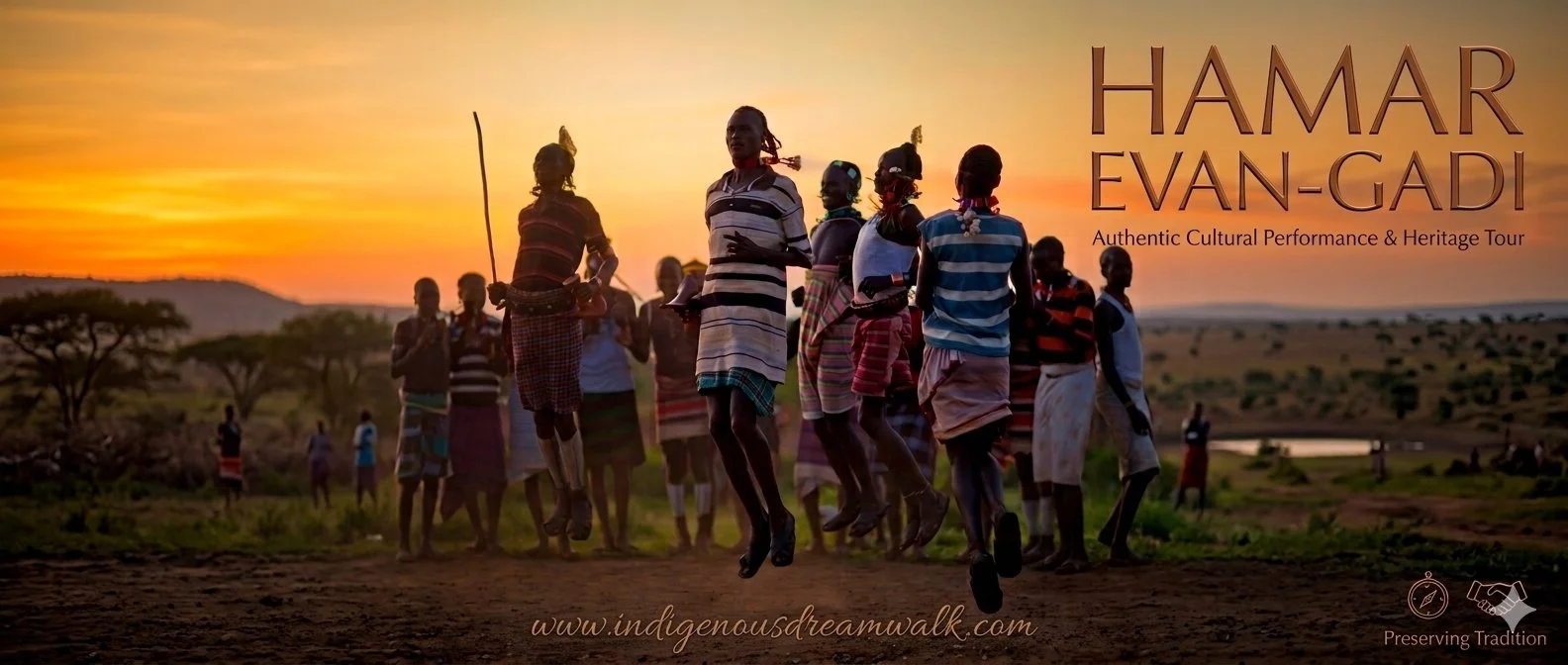
Bull Jumping - Evan Gadi - Burri-Bunno
*
Bull Jumping - Evan Gadi - Burri-Bunno *
Evan-Gadi
The Evangadi (literally translating to "the collective dance of the youth") is a famous, traditional moonlit night dance practiced by the Hamar tribe in southwestern Ethiopia’s Omo Valley. It serves as an energetic and vital courtship ritual and cultural celebration for the community's unmarried adolescents.
Burri-Bunno
The Burri Bunno ceremony—literally translated as “Morning Coffee”—is a foundational daily ritual of the Hamar tribe. Held early in the day, typically around 5:30 a.m. as the sun nears its peak, it serves as a sacred community meeting where elders and villagers gather to pray for peace, prosperity, and rain.
Bull-Jumping
The Ukuli Bula (literally "Bull Jumping") is the most important, multi-day rite of passage practiced by the Hamar tribe. It serves as a high-stakes test of a young boy's (Ukuli) bravery and physical strength. Successfully completing the leap is the strict cultural prerequisite for a Hamar man to marry, own cattle, and have children.
Big Dream, Big Impact.
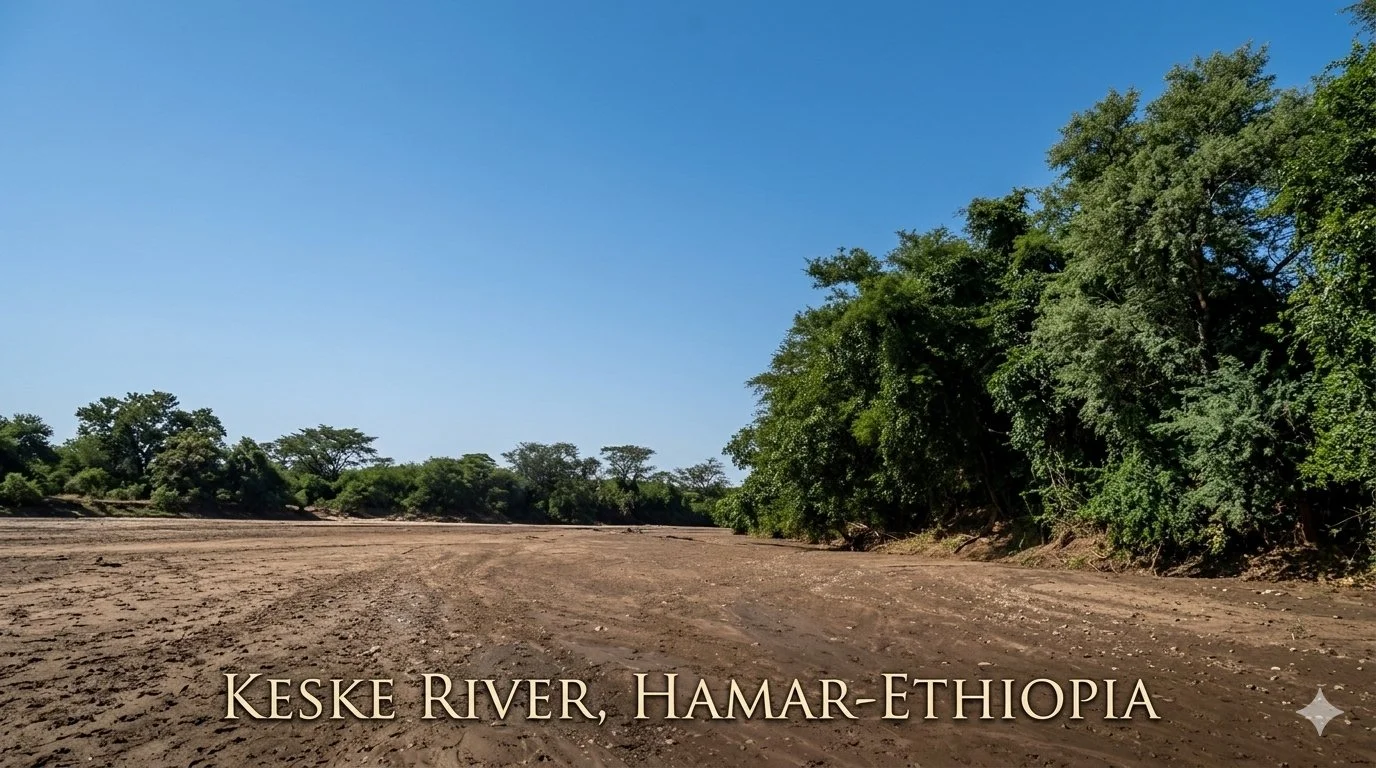
The Keske River flows as a bridge, connecting your journey with authentic Hamar indigenous life.
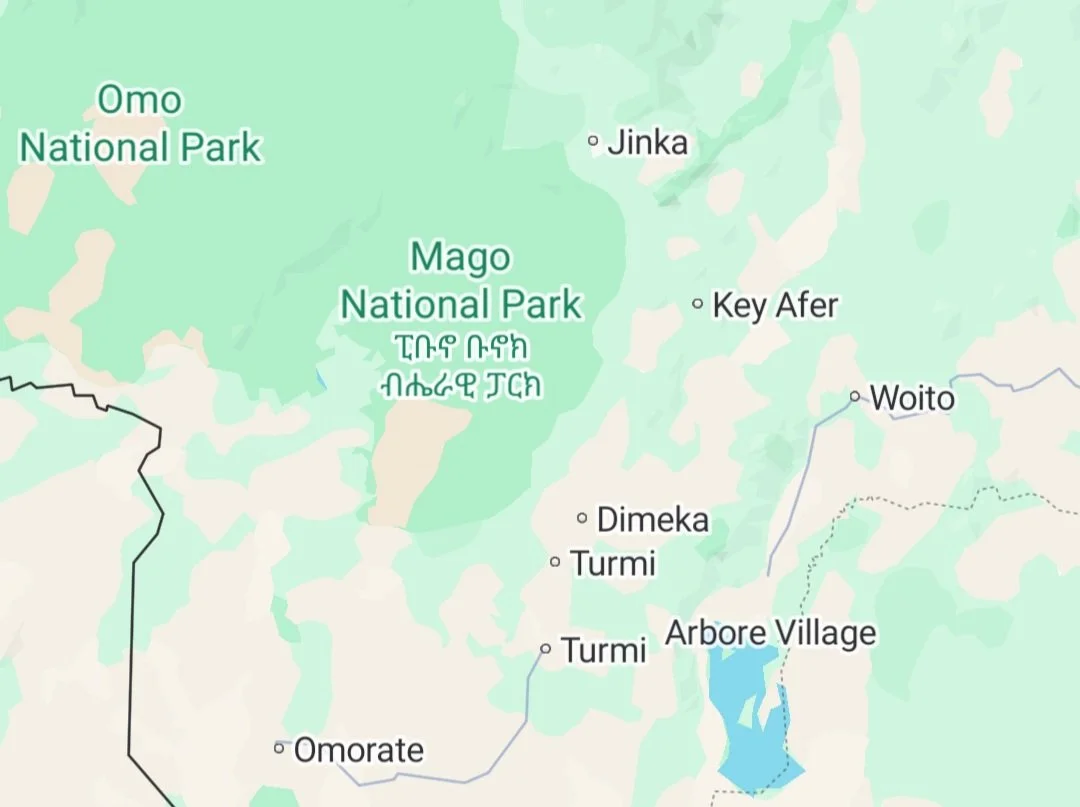
The Hamar people live in southwestern Ethiopia, in the Horn of Africa. Their ancestral homeland lies east of the Omo River in the newly restructured South Omo Zone, part of the South Ethiopia Regional State.
Their geographic territory is defined by several distinct regional features:
🏢 The Administrative Base: Dimeka City & Turmi
· Dimeka City: Located in the northern sector of the Hamar territory, Dimeka City stands as the newly established administrative capital of the South Omo Zone. It serves as the political and economic center for the entire district.
· Turmi: Situated further south down the main valley plain, Turmi is the traditional, historic cultural hub of the Hamar people and acts as the central base for community gatherings, ceremonies, and travelers.
🏔️ Geographic Boundaries & Terrain
Hamar occupies a semi-arid, brush-covered landscape that transitions dynamically between low savannah basins and highland ridges:
· Buska Mountain: This rugged mountain range slices directly through the center of Hamar territory. It acts as a grand geographic barrier that separates the hot, arid Omo River basin to the west from the low-lying Weyto River salt-flat basin to the east.
· The Keske Riverbed: Branching out near Turmi, this wide, sandy seasonal riverbed carves through the heart of Hamar land, serving as a walking highway for rural communities during the dry seasons.
🗺️ Bordering Communities
The location of the Hamar places them at a unique cultural crossroads, directly bordering several other prominent indigenous groups within the South Omo Zone:
· North & East: They border the Banne and Ari people near the market ridges of Key Afer.
· West: Their land slopes down toward the banks of the Omo River, bordering the Kara cliffs and the dense scrub woodlands of Mago National Park (home to the Mursi).
South: Their territory drops into the low plains toward the Kenyan and South Sudanese borders, meeting the Dasenech delta settlements of Omorate and the western plains of the Nyangatom
Hamar Location
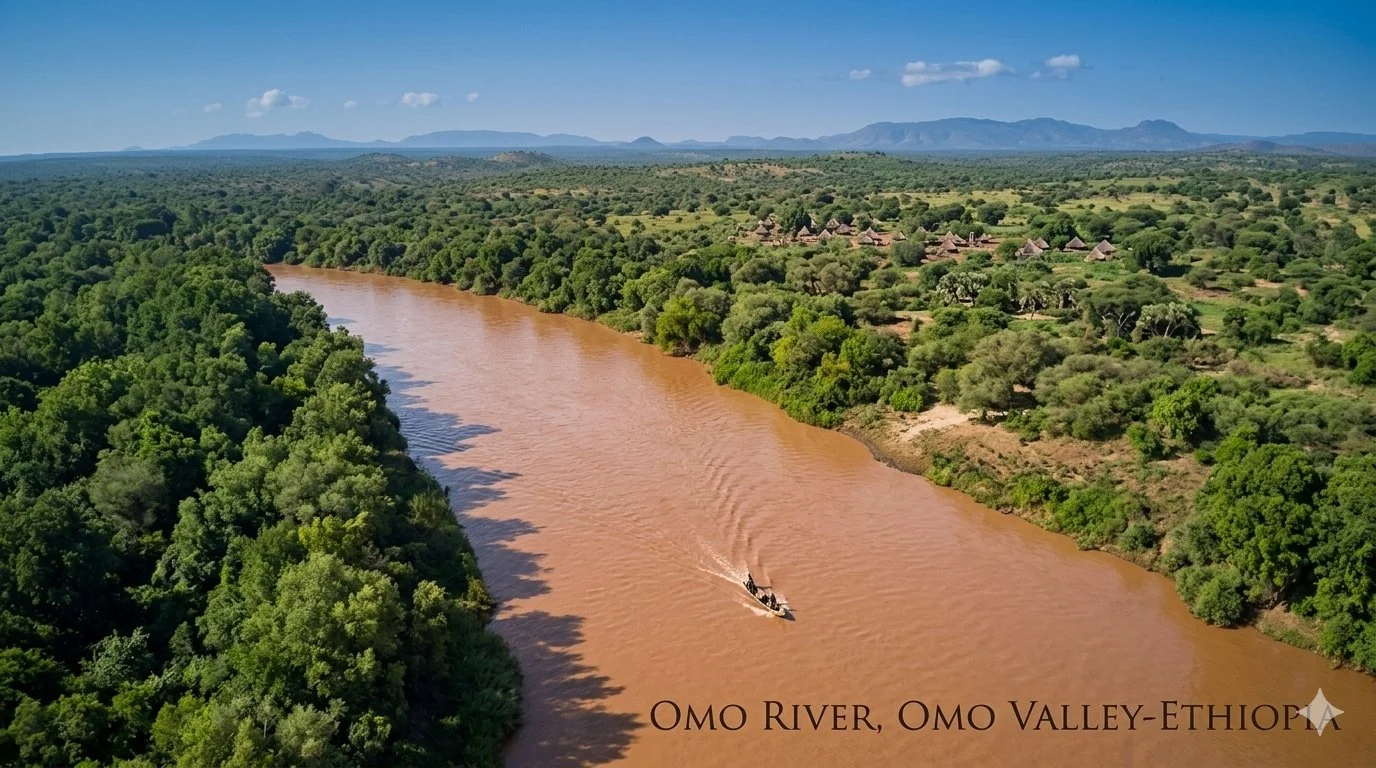
Big Dream, Big Impact.
We bridge your world with Omo Valley indigenous life, flowing with purposeful, intentional spaces.
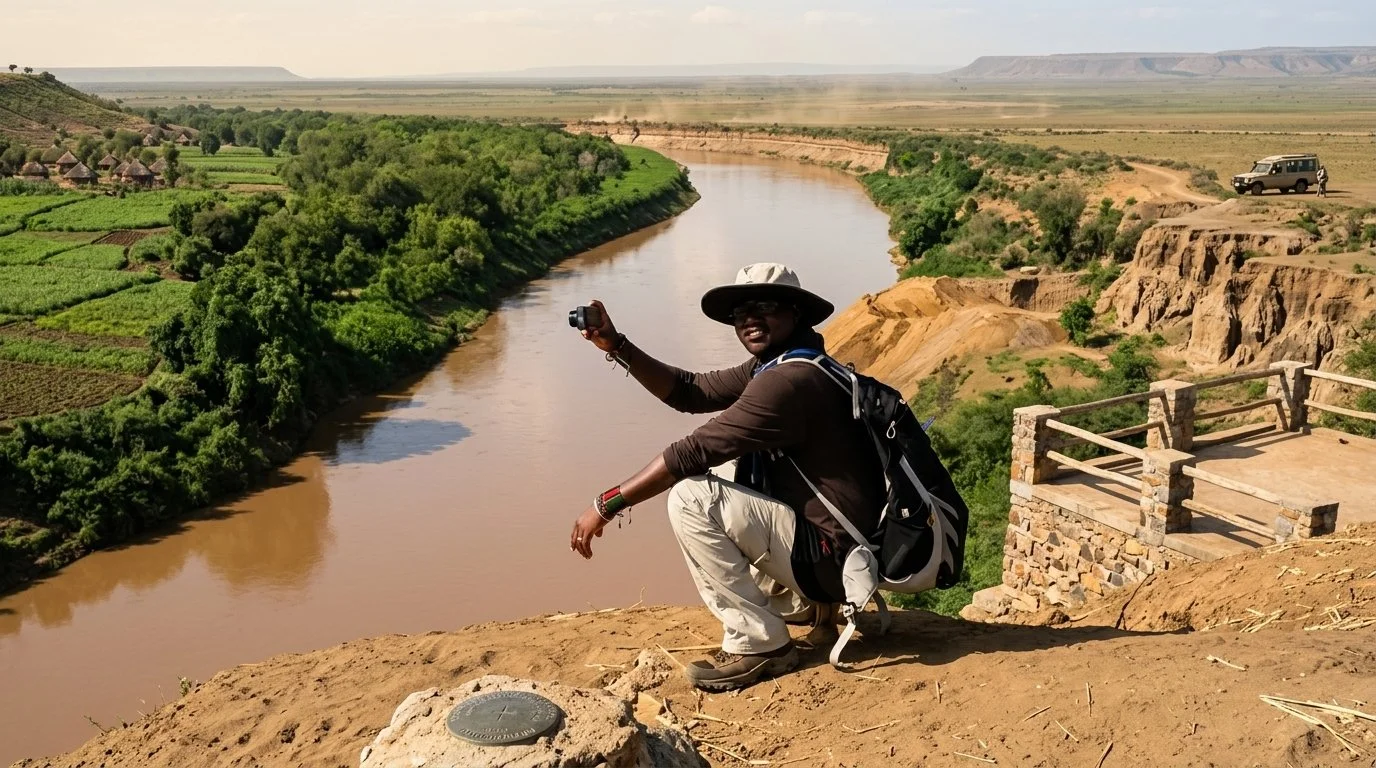
Discover Ethiopia's extraordinary South Omo Valley—a land of living cultures, ancient traditions, and raw, untouched wilderness.
🏢 The Dawn of a New Capital Zone
In a historic milestone, Dimeka City has been formally established as the administrative capital of the newly structured South Omo Zone. This political evolution places the historic, pulsing heart of the Hamar people at the center of the region's governance and sustainable development. Moving far beyond its reputation as a legendary open-air market hub, Dimeka City now stands as a modern beacon for regional administration, cultural preservation, and self-determined growth for Southwestern Ethiopia’s indigenous communities.
🎨 The Cradle of Living Heritage
Set between the rugged green peaks of Buska Mountain and the broad plains of the Omo River basin, South Omo is home to a remarkable diversity of people. Guided by ancestral wisdom, communities such as Hamar, Banne, Malee, Mursi, Kara, Arbore, Dasenech, and Nyangatom live in close harmony with the land’s natural rhythms.
From the striking, world-renowned visual identities of body adornment and ochre-clay artistry to powerful cultural milestones like the Ukuli Bula (Bull-Jumping ceremony), the celebratory midnight dances of the Evangadi dance, and the quiet dawn prayers of the Burri Bunno—tradition here is not history; it is a living, breathing spirit.
🐆 An Untamed Frontier
Where the cultural tapestry ends, a vast wildlife frontier begins. Spanning across the dense scrub woodlands of Mago National Park and the endless, rolling savannahs of Omo National Park, this region guards one of the last truly wild ecosystems in East Africa. It is a sanctuary where heavy elephant corridors, buffalo herds, and apex predators move freely under a boundless African sky.
🌍 Walk the Dream with Indigenous Dream Walk
Founded by Galtmbe B Shada, a son of the indigenous Hamar tribe, Indigenous Dream Walk serves as a premium, ethical bridge connecting the masterful craftsmanship of the Omo Valley with the global community.
By curating authentic, hand-carved artifacts like the Borkoto headrest and vibrant Shikini Ula-Guyita ceremonial beadwork alongside rugged, modern travel gear, we invite the modern explorer to move forward with purpose. Every direct artisan partnership keeps ancient techniques self-sustaining, ensuring that our ancestral voice remains powerful, proud, and vibrantly alive.
✨ Explore the Living History: indigenousdreamwalk.com
🏔️ SOUTH OMO: WHERE CULTURE MEETS THE WILD!
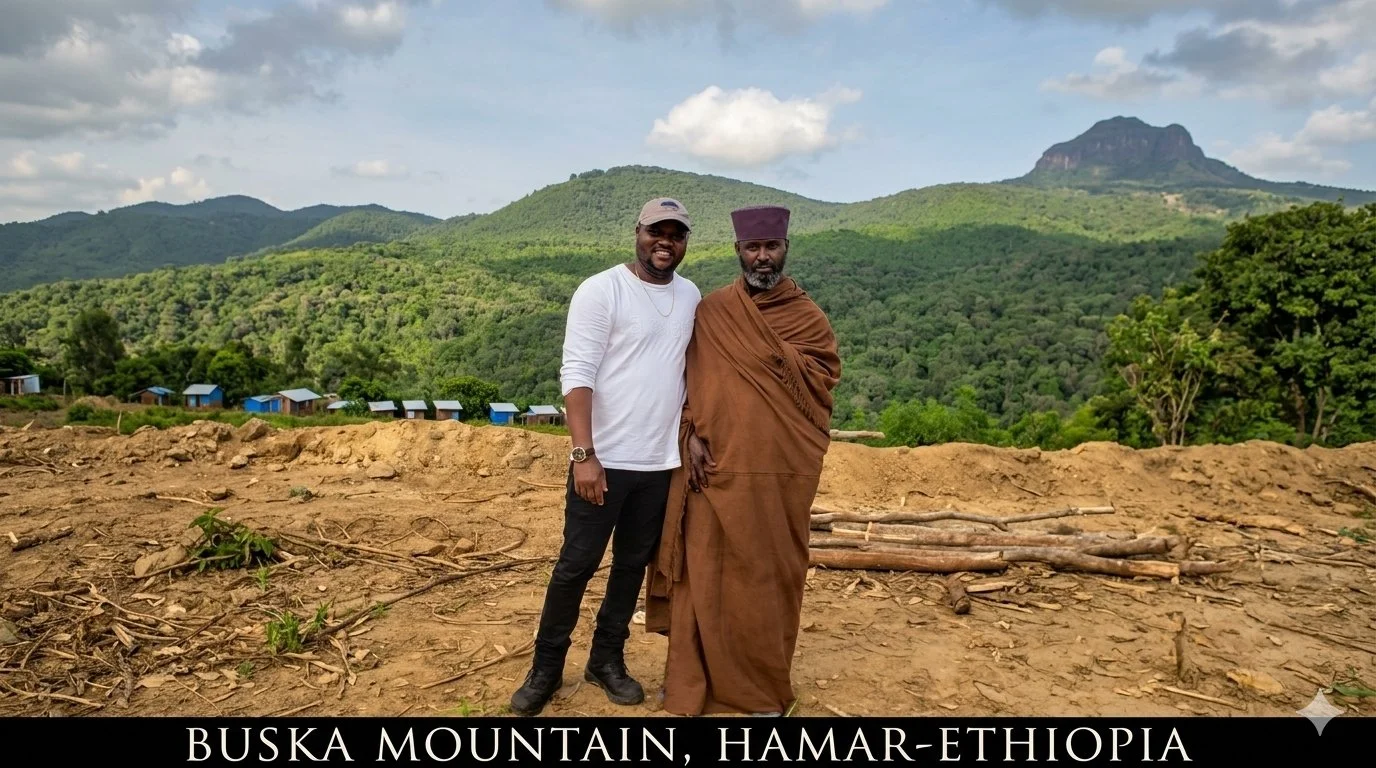
Buska Mountain Forest
Good spirit, big soul. Buska Mountain stands as a bridge, connecting your journey with authentic Hamar indigenous life.

Day 1: Cultural Foundations (Jinka Arrival)
· Morning Arrival: Touch down at Jinka Airport, meeting your driver and a standard 4x4 Land Cruiser.
· The South Omo Research Center Museum: Head directly to the South Omo Research Center (SORC) Museum. This center offers a vital anthropological baseline for your trip, showcasing authentic artifacts, traditional clothing, and photographs detailing the complex social histories of the valley's communities.
· Evening Briefing: Enjoy dinner in Jinka town while reviewing the bush tracks with your guide.
Day 2 & 3: The True Wilderness (Omo National Park Expedition)
· Crossing into the Wild: Depart Jinka at dawn, heading west into Omo National Park, one of the most remote and untouched wildlife sanctuaries in East Africa.
· Savannah Tracking: Utilize the high clearance and low-range gears of your 4x4 Land Cruiser to cross unpaved tracks around the Mui River. Spend your time tracking buffalo herds, elephants, leopards, and large prides of lions.
· Bush Camp & Return: Spend Night 2 at a designated park rangers' bush camp under the stars, before navigating the trails back up to your comfortable Jinka base on Day 3.
Day 4: Lip-Plates of the Mago (Jinka to Mago National Park)
· Deep Basin Descent: Drive down into the dense scrub wood valleys of Mago National Park.
· Mursi Community Immersion: Visit a traditional Mursi village. Learn firsthand about the historical legacy of the clay lip-plates crafted by Mursi women and the intricate geometric scarification patterns that mark ancestral family achievements.
· Prepping for the South: Return to Jinka to pack your gear for your descent into the new regional capital zone.
Day 5: Entrance to the New Capital (Jinka to Key Afer to Dimeka City)
· Morning Mountain Ridge: Drive southeast along the beautiful mountain ridges toward Key Afer.
· Key Afer Thursday Market: Arrive as the famous Key Afer Market hits its peak. This is a massive multi-tribal crossroads where Banne, Ari, Tsemai, and Hamar communities meet to trade livestock, tools, and grain.
· Welcome to the Capital: Drive into Dimeka City, proudly establishing its new identity as the newly established administrative capital of the South Omo Zone. Spend your afternoon exploring the growing town center and learning about how the local Hamar administration manages the surrounding pastoralist territories. Settle into a local lodge or eco-camp for the night.
Day 6: Overlooking the Capital (Buska Mountain Trek)
· Morning Ascent: Shift your Land Cruiser into low gear to tackle the steep, rocky dirt tracks winding up Buska Mountain. This rugged highland feature overlooks the expanding capital plains of Dimeka, providing incredible panoramic views of the entire valley basin.
· Isolated Mountain Settlements: Visit remote Hamar and Banne homesteads built along the high, green ridges. Learn how these mountains communities terrace their steep terrain for agriculture and manage life at a high elevation.
· Mountain Echoes: Set up an eco-camp or stay in a rustic ridge-top lodge to enjoy a cool mountain evening far above the savannah heat.
Day 7: Master Artists of the Omo Bends (Dimeka to Kara to Turmi)
· Cliffside Scouting: Descend from the mountain ridges and drive your 4x4 out toward the sweeping, dramatic loops of the main Omo River.
· Kara Visual Artistry: Visit the village of Korcho, Dus & Labuk perched high on a bluff overlooking the river. Meet the Kara people, world-renowned for using pulverized white chalk, ash, and yellow ochre to paint abstract, nature-inspired patterns across their skin.
· Base Camp Turmi: Head south into Turmi to settle into your permanent safari lodge or riverside eco-camp for the next three nights.
Day 8: The Border Delta (Turmi to Omorate to Turmi)
· The Deep Southern Plains: Cruise south down the highway toward Omorate, near the borders of South Sudan and Kenya.
· Dasenech River Crossings: Cross the Omo River in a traditional log canoe to explore a remote Dasenech settlement. See how they construct strong, wind-resistant architectural domes out of woven branches and sheets of iron to survive the harsh desert winds.
· Return to Turmi: Head back north to your Turmi base camp to rest before tomorrow's west-bank crossing.
Day 9: The Unbroken Frontier (Turmi to Kangaten to Turmi)
· West-Bank Overland: Ride comfortably in your 4x4 across the expansive Omo River bridge into the western desert frontier of Kangaten.
· Nyangatom Frontier Life: Walk through a highly protective thorn-bush village of the Nyangatom people. Witness the heavy, multi-layered glass seed-beaded necklaces worn by the women that stack up underneath their chins, a visual signifier of wealth and community standing.
· Final Night Celebrations: Return to Turmi for your final evening dinner under the stars.
Day 10: The Rhythmic Monday Market & Departure (Turmi Central to Jinka)
· Monday Market Adornments: Walk directly into the vibrant Turmi Monday Market to catch the early trading action. Witness the beautifully braided, rich red-ochre clay tresses of the Hamar women before gathering for a traditional Wa Coka open-fire wood barbecue lunch (Wetele) roasted meat.
Return to the Highlands: Board your Land Cruiser for the final journey through the mountain passes to Jinka.
· Onward Flight: Arrive directly at Jinka Airport to catch your afternoon domestic flight connection back to Addis Ababa…and more.
🗺️ The Revised 10-Day Capital & Highland Expedition Route